Solicitor calls for government to re-examine claims of IRA and Garda collusion during the Troubles

John McBurney

John McBurney

The solicitor for the family of a policeman murdered by the IRA has called on the Irish government to re-examine claims of IRA and Garda collusion in a series of border area killings.

John McBurney said an independent panel should look into a number of incidents that led to a dozen deaths.

Mr McBurney represented the Breen family at the Smithwick Tribunal.

Chief Supt Harry Breen and Supt Bob Buchanan were shot dead in March 1989.

They were killed in an IRA ambush in south Armagh, as they crossed the border into Northern Ireland after a meeting in Dundalk Garda Station.

The Smithwick Inquiry was set up by the Irish government in 2005 to investigate claims that officers based in Dundalk station had assisted the IRA gang who ambushed the two officers on 20 March 1989.

It found there was Irish police collusion in the murders.

Mr McBurney made his comments during a BBC NI Spotlight investigation on Tuesday.

He said that some of the findings made by Judge Smithwick led him to believe that a number of cases should be re-examined.

He said: “It makes you think that when Judge Smithwick finds that in March 1989, a guard or guards provided the information to the same terrorist grouping that in 1988 was providing information which led to the murder by mistake of the Hanna family.

“Who was providing information which led to the murder of Lord Justice and Lady Gibson; who perhaps was assisting in the disposal in forensics in the murder of Terence McKeever; who assisted with knowledge about the movement of the Brinks Mat van on that fateful day in 1985.

“All of those events could quite easily have been contaminated by information from a guard or guards.

“That leaves you asking the question, do we not need to probe each and every one of those incidents in an organised and structured way, in order to identify precisely who the colluder or colluders were.

“People have lost so much over these years. That’s what they are longing for, those details and that acknowledgement.”

Source: BBC NI

Lawyer calls for reopening of Smithwick Tribunal following Garda surveillance scandal

Chief Supt Harry Breen and Supt Bob Buchanan were murdered by the IRA in March 1989 after leaving a meeting in Dundalk Garda Station

Chief Supt Harry Breen and Supt Bob Buchanan were murdered by the IRA in March 1989 after leaving a meeting in Dundalk Garda Station

The Smithwick Tribunal should be reopened on the back of the Garda surveillance scandal.

That’s according to the lawyer for the family of former RUC Chief Superintendent Harry Breen, who was gunned down along with his colleague Superintendent Bob Buchanan on their way home from a security meeting in Dundalk in March 1989.

John McBurney said yesterday that the recent revelations that phone calls at stations have been recorded since the 1980s could have major ramifications on the Smithwick Tribunal’s outcome, despite the fact that Judge Peter Smithwick published his findings last December.

Judge Smithwick found gardaí colluded in the RUC men’s double murder but failed to pinpoint definitive evidence to blame an individual officer for informing the IRA of their movements.

His long-running inquiry was repeatedly told by senior gardaí that they did not have suspicions of an IRA mole among their ranks in Dundalk Garda station.

Mr McBurney said it would be incredible if there were no tapes of calls in and out of Dundalk when lines at the divisional headquarters of Drogheda and Monaghan were understood to be under surveillance.

He said: “Judge Smithwick must be troubled. He has the power to reopen an inquiry if he feels that he had information deliberately withheld and that could have been an attempt to pervert the course of justice.

“He would want to look at that further.”

Six ther high-profile cases may also have been discussed on recorded calls in the border region, according to Mr McBurney, including information on Cooley farmer Tom Oliver, who was murdered by Provos in 1991 for allegedly being an informer.

Mr McBurney said he was not claiming a tape exists from Drogheda or Monaghan that proves calls were made to the Provos with information that led to those killings but that they may contradict evidence from gardaí who told the tribunal there were no concerns about an IRA mole.

He said: “It beggars belief that the judge was trying at a basic level to get details of phone calls in Dundalk and could not, yet there could be wholesale recording of conversations at that station and other stations.

“The very first thought that came into my head was the days and days of evidence that we listened to from engineers and garda specialist officers convincing us that the Provos had not bugged Dundalk, that everything had been checked thoroughly, and all along the Garda had bugged themselves.”

Ernie Waterworth, solicitor for the Buchanan family, said the revelations that recordings might exist of phone calls in and out of Dundalk around the time of the double murder is frightening.

“Even the fact that Drogheda and Monaghan could have had the phone lines recorded, to me that causes concern,” he said.

“The people in Dundalk would have been talking to Drogheda when making arrangements for the movements of VIPs, protective operations. The visits of (late RUC Chief Constable) Sir John Hermon, Judge Gibson… All of that is frightening what you could take from it.

“I feel that all of that, the likes of the communications from Garda HQ in Dublin to border stations and so on, Dundalk would have to have been notified.

“The revelations are concerning.”

Mr McBurney said he is minded to contact the head of a commission of inquiry set up to investigate the bugging scandal with his concerns once they are appointed.

Solicitor defends Smithwick Tribunal

Chief Supt Harry Breen and Supt Bob Buchanan, who were murdered in an ambush just over the border after leaving Dundalk Garda Station in 1989

Chief Supt Harry Breen and Supt Bob Buchanan, who were murdered in an ambush just over the border after leaving Dundalk Garda Station in 1989

A solicitor for the family of an RUC officer whose murder was found by the Smithwick Tribunal to be linked to Garda collusion with the IRA has launched a strong defence of the inquiry’s findings.

His statement comes after three former Dundalk Gardaí – retired det chief supt John O’Brien, former chief supt Michael Finnegan and former chief supt Michael Staunton, claimed the tribunal’s finding is not grounded in facts and should be rejected by the Government “as a matter of urgency and justice”.

However, John McBurney, solicitor for the family of murdered RUC officer Harry Breen, says the gardaí’s critique is highly selective, filled with errors and displays a lack of familiarity with the inquiry’s findings.

The solicitor’s response, published in today’s Irish Times, also claims the critique by former gardaí displays a lack of independence and a keenness to accept the IRA’s versions of events.

In addition, Mr McBurney staunchly defends the Smithwick Tribunal’s report as a “comprehensive, nuanced and fair document”.

You can read Mr McBurney’s statement on IrishTimes.com

Former Dundalk Gardaí challenge Smithwick Tribunal findings

smithwick-tribunal-deadline-310x415

Three former Gardaí, who were all based in Dundalk, are challenging the findings of the Smithwick Tribunal.

The trio have published a comprehensive evaluation of the Tribunal’s conclusions, challenging its key finding of collusion by unnamed gardaí in the murders of two RUC officers.

They claim the tribunal’s finding is not grounded in facts and should be rejected by the Government “as a matter of urgency and justice” and contend it adversely affects the relationship between the Garda Síochána and the PSNI.

The critique, carried out by retired det chief supt John O’Brien, former chief supt Michael Finnegan and former chief supt Michael Staunton runs to over 30 pages and has been sent to Taoiseach Enda Kenny, Minister for Justice Alan Shatter, and the Clerk of the Dáil. The Government is understood to be considering their report.

The retired gardaí, all of whom served in the Dundalk district at various times, say the finding of collusion “undermines the capacity of this State to actively pursue the many substantiated acts of collusion committed in the course of the conflict”, and claim the finding impugns the good name and reputation of gardaí who had no opportunity to be represented before the tribunal or to address the allegation made against them.

Mr Staunton was an inspector in Dundalk when the Provisional IRA shot dead RUC Chief Supt Harry Breen and Supt Bob Buchanan in south Armagh in 1989 just after they had left a meeting at the station. Both he and Mr Finnegan, who was posted as an inspector to Dundalk after the murders, gave evidence to the tribunal. Mr O’Brien spent much of his career investigating terrorism and also served for two years as an adviser to the Garda Ombudsman.

They believe the tribunal failed to conduct basic investigative work or even to hire its own investigators, as was recommended. In the absence of “direct evidence” on collusion, the tribunal accepted information given in private by the PSNI’s Assistant Chief Constable Drew Harris and then “parachuted in” the theory that unidentified Garda members had colluded in the killings. This occurred “neatly” after the initial three-named Garda suspects were exonerated by the tribunal.

Assistant Chief Constable Harris’s information was presented as “live and of the moment” and suggested there was collusion by a Garda member, or members, in the murders.

Their report says no effort was made to evaluate the intelligence, given at the very end of the eight-year tribunal, and its sources. The three former Garda officers conclude : “The tribunal displays naivete in relation to the activities of foreign intelligence agencies and the production of them of unverifiable and ungraded information.”

They believe the tribunal did not place enough emphasis on the evidence of former members of the Provisional IRA who met the tribunal and outlined how they had planned the killings without, they claimed, assistance from any Garda members.

Source: The Irish Times

Call for Garda-PSNI inquiry into IRA killings in Dundalk area

Tom Oliver from Cooley, who was killed by the IRA for allegedly passing information on their activities to Gardaí in Dundalk

Tom Oliver from Cooley, who was killed by the IRA for allegedly passing information on their activities to Gardaí in Dundalk

Relatives of those killed in IRA attacks in the Dundalk Border area have called for a joint Garda-PSNI inquiry following the publication of the Smithwick Tribunal report last week.

The calls relate to a range of cases where information which may have been of assistance to the killers was available to gardaí in Dundalk.

Last week the Smithwick Tribunal found that, on the balance of probability, the IRA was given a tip-off from someone inside Dundalk Garda Station, which assisted in the killings of RUC officers Harry Breen and Bob Buchanan in March 1989.

Amongst the cases that relatives want reviewed is the bombing of a Brinks Mat security van in 1985, moments after the RUC had taken over escort duty from gardaí as the van crossed the border. Four RUC officers, William Wilson (28), Stephen Rodgers (19), David Baird (22) and Tracy Doak (21) were killed.

Another up for possible review is the killing of Appeal Court judge Maurice Gibson and his wife Cecily shortly after crossing the border in April 1987 and the killings of Robert and Maureen Hanna and they son David as they returned from Disneyland via Dundalk in July 1988.

From a local perspective there has also been calls to investigation the killing of Cooley farmer Tom Oliver, who was murdered by the IRA after claims he had passed information to gardaí in Dundalk about IRA activities.

Another case that could be examined is the killing of contractor Terence McKeever, who was killed by the IRA in Cullyhanna in June 1986.

Speaking to The Irish Times, solicitor John McBurney, who represented the family of Harry Breen, and now represents the Hanna family, said there was evidence gardaí in Dundalk were told in advance of the movements of at least some of the victims.

He said the Smithwick Tribunal had sight of a memo from

gardaí in Drogheda providing details of the car in which Lord Justice Gibson and his wife Cecily were travelling.

Mr McBurney said the two older Hanna children “who were orphaned by the killing of their parents and brother” now wanted to know if details of the movements of Judge Higgins had also been supplied to Dundalk gardaí.

He said the families of other victims would also want to know if a tip-off played a part in their murders.

“These were killings which happened in the North and in the new spirit of co-operation between gardaí and the PSNI, we would like to see a joint inquiry or review of these cases,” said Mr McBurney.

Source: The Irish Times

Adams rejects claims he blamed RUC officers for their own deaths

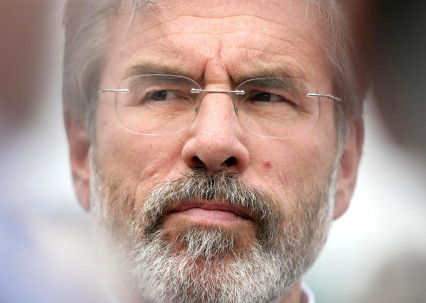
Gerry Adams

Gerry Adams

Sinn Fein president Gerry Adams has said it is nonsense to suggest he blamed two of the most senior RUC officers killed by the IRA for their own deaths.

The local TD said those who attack him are at odds with the Smithwick report, which raised concerns about the security arrangements in place for Chief Superintendent Harry Breen and Superintendent Bob Buchanan.

Politicians on all sides in Dublin and Belfast reacted in disbelief after Mr Adams said the men effectively drove themselves to their own death.

Mr Adams claimed his comments reflect what was recorded by Judge Peter Smithwick at the end of an eight-year investigation.

“So those who attack me are at odds with what is contained in the Smithwick report,” he said.

“It is nonsense to suggest that I was blaming the two RUC officers for their own deaths.

“Everyone knows the IRA was responsible. That was never in question.”

The tribunal found an unidentified IRA mole in the Garda station in Dundalk tipped off a terrorist hit squad that the men were attending a meeting in the town on the day of the murders, March 20 1989.

Mr Adams said the Smithwick report also recorded concerns about the security arrangements for RUC officers travelling to Dundalk through South Armagh.

“These include the fact that information about possible IRA attacks on RUC officers crossing the border was passed to Garda Headquarters and passed by it to the RUC,” he said.

“It is a fact that RUC officer Bob Buchanan was crossing the border on average ten times each month and on most occasions he travelled in his own car which was ‘readily identifiable’.”

Mr Adams said he is conscious that at the heart of this issue are two bereaved families.

“I did not need reminded of this by any of my political opponents and I am concerned, as I was during the Newstalk interview, not to say anything which detracts from that or which causes any further hurt,” he said.

“That was never my intention.”

Adams called upon to withdraw comments on Smithwick Tribunal report

Gerry Adams

Gerry Adams

Sinn Féin president Gerry Adams has come under fire from politicians on both sides of the border for his comments on the report of the Smithwick Tribunal yesterday.

The Louth TD said that RUC officers Harry Breen and Bob Buchanan had taken a “laissez faire” attitude to their own safety, which has been reported in the media that they were to blame for their murders.

Justice Minister Alan Shatter yesterday described Mr Adams’ remarks as “nauseating”.

Speaking at a press conference in Farmleigh House in Dublin, Mr Shatter pointed to sections in the report relating to Mr Adams.

The Minister said Mr Adams had appeared at an event in Crossmaglen shortly after the double shooting when a man wearing a hood gave an explanation for the murders.

Mr Shatter said it was “very unlikely” Mr Adams did not know more about what happened to the two men.

Fianna Fáil leader Micheál Martin called for a full Dáil debate on the report and also criticised Mr Adams over his statement about the two murdered officers.

He said the statement should be withdrawn and it almost by implication blamed the officers themselves for their killing.

Mr Adams responded that his public statement reflected the views of the Smithwick report. He described the two RUC officers as brave men doing their duty as they saw it in the same way that the IRA did their duty as they saw it.

Chief superintendent Harry Breen and superintendent Bob Buchanan were shot dead on March 20th, 1989 near the Border in south Armagh shortly after a meeting with gardaí in Dundalk, Co Louth.

The Smithwick Tribunal report published yesterday found someone in Dundalk Garda station tipped off the IRA before they were killed.

In the interview on Newstalk radio Mr Adams said the officers failed to show due regard for their safety and added he was not aware of collusion involving gardai in IRA killings.

“If you read the evidence (to tribunal lawyers) by the former IRA volunteers and I say this with as much sensitivity as I can muster – these two very prominent RUC officers were sailing in and out of Dundalk Garda station, (and) were doing so in quite an open way,” Mr Adams said.

“The former IRA volunteers said that one of the officers was spotted coming from the station, that they then used a house overlooking the station to monitor comings and goings, that they were able to trace – I think there was also a pattern in terms of meetings.”

Mr Adams said: “When you have that type of laissez-faire disregard for their own security, by both An Garda Síochána in relation to these two officers, and more importantly these officers themselves – here they were in the heart of south Armagh in the middle of a very, very severe conflict at that time, and seemed to think that they were immune from attack by the IRA, and tragically as it turned out for them that was not the case.

“When you have that type of failure to protect the RUC operatives in the middle of a war then what happened happens.

“I’m sure the same thing has happened with IRA volunteers who were killed, that it was not necessarily intelligence or inside information but simply that they made a mistake. This has happened tragically in all conflicts.”

In the interview on Newstalk radio Mr Adams said he was not aware of collusion involving the Garda force in IRA killings.

Smithwick Tribunal finds Garda collusion in killing of two RUC officers in 1989

0005aaf0-642The Smithwick Tribunal has concluded that there was Garda collusion in the killing of two RUC superintendents in south Armagh in March 1989.Chief Superintendent Harry Breen and Superintendent Bob Buchanan were shot dead by the IRA shortly after leaving a meeting at Dundalk Garda Station.

Minister for Justice Alan Shatter has apologised without reservation for any failings identified in the report on the part of the State or any of its agencies.

He said the murders were stark examples of the brutality “which pervaded this island for many dark years”.

Tánaiste Eamon Gilmore said he was appalled and saddened by the finding of collusion and described it as a matter of grave public concern.

Mr Gilmore, on behalf of the Government and people of Ireland, apologised without reservation to the Breen and Buchanan families.

In his 500-page report, Mr Justice Peter Smithwick states that he is satisfied that there was someone within Dundalk Garda Station assisting the IRA.

But the report concluded that the Tribunal has not uncovered direct evidence of collusion.

“There is no record of a phone call, no traceable payment, no smoking gun,” the report has found.

Judge Smithwick said it seems to him to be likely that the Provisional IRA would seek to exploit that resource by having one or more individuals confirm the arrival of the two RUC officers at the station.He said: “It is particularly regrettable that both police services acted swiftly to dismiss speculation of the possibility of collusion rather than to deal with that by means of a thorough and credible investigation.”

“This was an example of the prioritisation of political expediency in the short term, without due regard to the rights of victims and the importance of placing justice at the centre of any policing system.”

He said, however, that detailed consideration must be given to the events of 20 March 1989, when the RUC officers were killed.

He said following detailed consideration, he has reached the conclusion that from the afternoon or early evening of the previous Thursday 16 March 1989, it was intended that Chief Supt Breen and Supt Buchanan would travel to Dundalk at the beginning of the following week.

Those RUC officers who attended that meeting would have been aware of this plan, and a number of others became aware of it during the course of Friday 17 March and Saturday 18 March.

He went on to note that just after 10am on Monday 20 March Supt Buchanan told Supt Tierney in Dundalk Garda Station that he and his Divisional Commander wished to visit the station that day.

Judge Peter Smithwick concluded that Supt Buchanan spoke to Chief Supt Nolan and a meeting was arranged.

Chief Supt Nolan shared that information with Inspector Frank Murray at a tea break at around 11am and the possibility that other persons heard that conversation cannot be excluded.

Judge Smithwick found that Active Service Units of the IRA were active on the day in question and were on standby for an anticipated operation, before the arrival of the two officers at Dundalk Garda Station.

He said that it seemed “beyond doubt” that the IRA acquired information that the two officers had arrived at the station.

He also said the evidence pointed to the conclusion that Supt Breen was the target of the operation and that the Provisional IRA knew he was coming.

He said he was satisfied that the evidence pointed to the fact that there was someone within the garda station assisting the IRA.

In his findings, Judge Smithwick said the “integrity of and confidence in An Garda Síochána can properly be maintained only if suggestions of inappropriate or illegal conduct by members are taken seriously, transparently and thoroughly investigated and, above all, not tolerated or ignored on the basis of some misguided sense of loyalty to the force or to its members”.

He said the culture of failing to adequately address suggestions of wrongdoing, either for reasons of political expediency or by virtue of misguided loyalty, has been a feature of life in this State.

He concluded that “too often that culture has resulted, some years later, after doubts, grievances and injustices have festered, in the setting up of investigations, commissions or Tribunals of Inquiry”.

Judge Smithwick said the Tribunal sought to establish the truth and, in so doing, he said he hoped that it contributed one small part to changing that culture.

The Smithwick Tribunal was set up in 2005 to examine whether a member of An Garda Síochána or any other employee of the State had passed information to the IRA which allowed them time to set up the ambush in south Armagh in which the RUC officers were murdered.

Mr Justice Smithwick began private investigations in 2006 and held public hearings from 2011 until earlier this year.

Corrigan had inappropriate dealings with IRA

The tribunal found that former garda detective Owen Corrigan had an inappropriate relationship with subversives.

Judge Smithwick said Mr Corrigan became disaffected, possibly in the 1980s, with the detective branch in Dundalk where he was based.

“I also find that what may have started out as a professional relationship with subversives for the legitimate purpose of intelligence-gathering ultimately developed into a relationship of an inappropriate nature,” he said.

Mr Corrigan’s evidence to the tribunal was vague, evasive and inconsistent and was not credible, the report concluded.

“I do not think that he has been truthful to the tribunal in his evidence in relation to a number of matters,” Judge Smithwick said.

Furthermore, it was found that widespread concerns about Mr Corrigan’s “extra-curricular activities” – including smuggling and his relationship with subversives – were ignored by senior gardaí.

“I believe that there were sufficient warning signs, such that senior Garda officers should have taken steps to have Detective Sergeant Corrigan transferred away from the border area earlier than this, in fact, occurred,” Judge Smithwick said.

RUC concerns about him were relayed to assistant commissioner Eugene Crowley – who went on to become garda commissioner – in 1987 “but there is no evidence of any action having been taken on foot of this information,” the tribunal found.

Judge Smithwick found that while there is some evidence that Mr Corrigan passed information to the Provisional IRA, he is “not satisfied that that evidence is of sufficient substance and weight to establish that Mr Corrigan did in fact collude in the murders.

No evidence Colton colluded with IRA in murders

Judge Smithwick said that in relation to retired sergeant Leo Colton he found that on a strong balance of probabilities he was someone who in the course of 1995 and 1996 assisted the Provisional IRA by having his former colleague sergeant Finbarr Hickey sign false passport application forms.

However, he said that while this was a relatively significant form of assistance and IRA members had “considerable trust” in Mr Colton and he would have been in the position to provide information about the IRA operation, the evidence does not establish that he colluded with the Provisional IRA in the murders.

Hickey not in a position to pass information on the day

In relation to former sergeant Hickey, Judge Smithwick concluded that he was not on duty on the day of the ambush, and was “in all probability” not in the station before the murders occurred.

The judge said he was satisfied that Mr Hickey was not in a position to pass information to the IRA which facilitated the ambush.

Families shocked by findings

Supt Bob Buchanan’s son William said: “The findings are both incredible and shocking and confirm the existence of a mole in Dundalk station. This led to my father’s death.”

The family of Harry Breen have said all their fears have been realised by the tribunal’s devastating findings.

Lawyers for the family said the officer and his trusted colleague Superintendent Bob Buchanan were betrayed by their counterparts in the Republic’s police force.

Source: RTÉ News

Smithwick Tribunal to end today

Ch Supt Harry Breen and Supt Bob Buchanan were murdered by the IRA in March 1989

Ch Supt Harry Breen and Supt Bob Buchanan were murdered by the IRA in March 1989

A public inquiry into the murders of the two most senior Royal Ulster Constabulary officers killed during the Troubles is expected to end today.

The Smithwick Tribunal was set up to investigate claims that local Gardaí colluded in the deaths of RUC Chief Supt Harry Breen and Supt Bob Buchanan.

They were shot dead an an IRA ambush while returning from a meeting in Dundalk Garda Station.

The Dublin-based tribunal is due to hear closing statements today.

Over 200 witnesses have testified since the tribunal was established in 2005, including former IRA members and spies in the British security services.

Many allegations were made, some centring on former garda sergeant Owen Corrigan.

He denied collaborating with the IRA, despite one RUC intelligence document that said he passed on information.

Suspicions have also fallen on two other Dundalk gardai; Leo Colton and Finbarr Hickey.

They too deny leaking information to the IRA.

In a statement to the inquiry, the IRA said the killings were the result of a lengthy surveillance operation and that they had no help from any garda officer.

While one British intelligence document suggested there were several Dundalk gardai up to and over the rank of sergeant leaking to the IRA, another British intelligence document said none of the three mentioned in the tribunal helped the IRA.

The inquiry also heard evidence of the PSNI not passing on recent intelligence on the murders to gardai.

So, the chairman, retired judge Peter Smithwick, will have a difficult task in reaching a definite conclusion with a verdict expected in October.